
Homemade King Cake
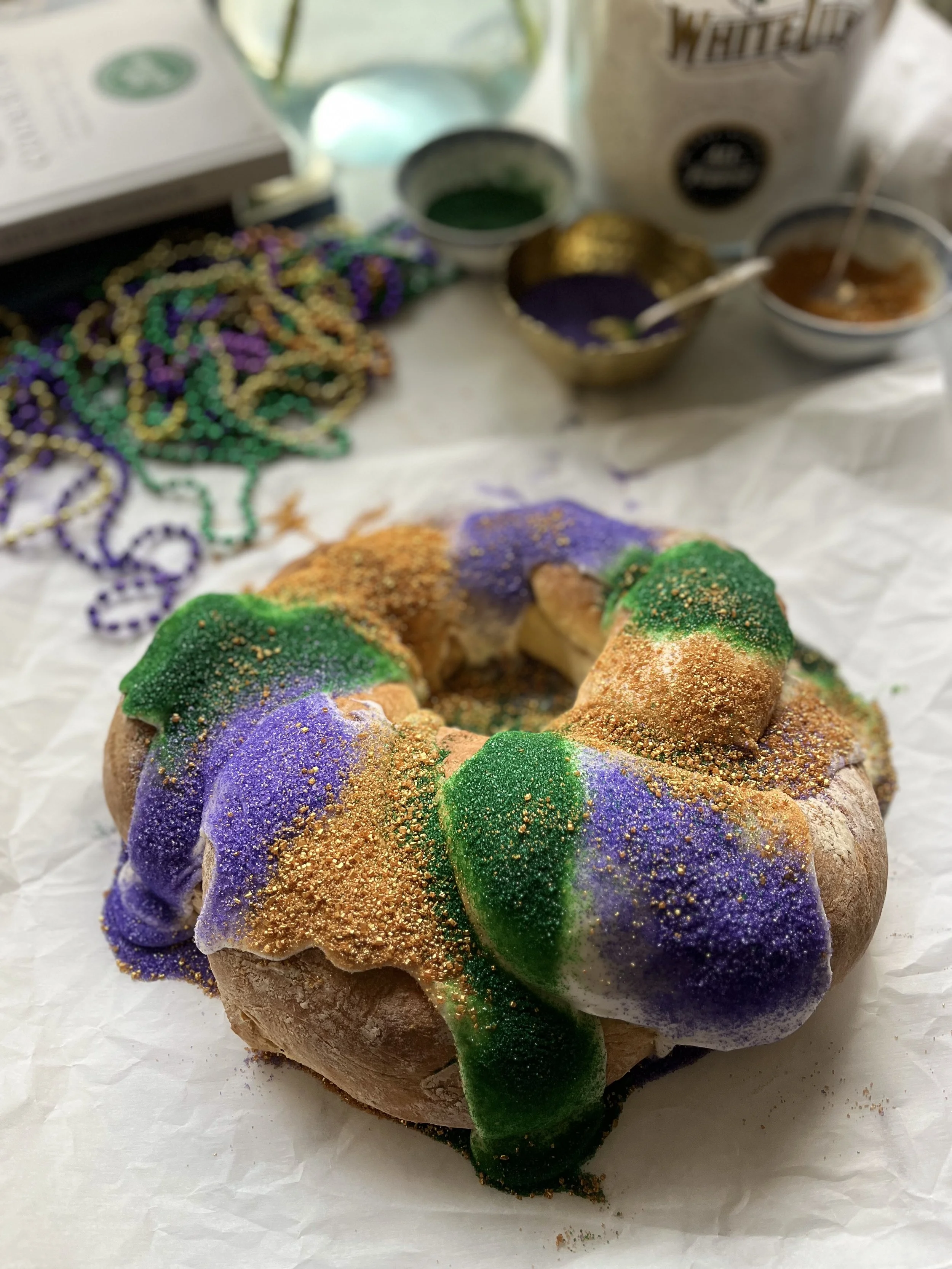
King Cake 👑—also known as Twelfth Night Cake—has always been a family favorite around here 💜💚💛
Every year, it marks the beginning of a sweet season rooted in tradition and celebration. King Cake was originally baked to honor Epiphany on January 6, the day that commemorates the arrival of the three wise men bearing gifts to baby Jesus ✨
I usually bake our King Cake sometime between Epiphany and Fat Tuesday. Today I’m sipping my tea, scrolling through old photos, and debating… do I make one today? And if I do, will it be completely from scratch or my semi-homemade version💭
Either way, there’s something special about keeping this tradition alive—one slice at a time.
Epiphany prayer: Lord, take away my pride; crush my self-love,
my desire to affirm myself
and impose myself on others.
Make the foundation of my personality
my identification with you.

Homemade King Cake
Ingredients
- 5 to 5⅓ cups all purpose flour (600 to 640 grams, divided)
- ⅓ cup (67 grams) granulated sugar
- 1 (0.25 oz) package of active dry yeast
- 1¼ tsp kosher salt, divided
- 1¼ cups whole milk
- 1/2 cup unsalted butter, room temperature
- 1 large egg, room temperature
- Non-stick cooking spray
- 4 oz cream cheese, softened to room temp.
- 1 tbsp butter, softened to room temp.
- 1 cup powdered sugar
- 1 tsp ground cinnamon
- ½ tsp vanilla extract
- 3 cups confectioners sugar
- ¼ cup whole milk
- 2 tbsp unsalted butter, melted
- ⅛ tsp kosher salt
- Purple Sanding Sugar
- Green Sanding Sugar
- Gold Sanding Sugar
- *plastic baby figurine, optional
Instructions
- Combine 1½ cups (180 grams) flour, granulated sugar, yeast, and salt in the bowl of a stand mixer fitted with the paddle attachment. Beat at medium-low speed until well combined, stopping to scrape sides of bowl.
- Heat milk and ½ cup butter in a medium saucepan over medium heat until butter is melted and an instant-read thermometer registers 120°F (49°C) to 130°F (54°C). Add milk mixture to flour mixture; beat at medium-low speed for 2 minutes, stopping to scrape sides of bowl. Add egg; beat at medium speed for 2 minutes. With mixer on low speed, gradually add 3½ cups (420 grams) flour, beating just until combined and stopping to scrape sides of bowl.
- Switch to the dough hook attachment. Beat at medium-low speed 8 to 12 minutes or until a soft, tacky dough forms, stopping to scrape sides of bowl and dough hook; add up to remaining ⅓ cup (40 grams) flour, 1 tablespoon (7.5 grams) at a time, if dough is too sticky. (Dough should pass the windowpane test [see notes] but may still stick slightly to sides of bowl.)
- Spray a large bowl with cooking spray. Add dough to bowl, turning to coat surface. Cover and let rise in warm place (75°F/24°C) 40 minutes to 1 hour or until doubled in size.
- While the dough is going through its first rise, prepare the filling. In a medium size bowl, beat softened cream cheese and butter together with a hand held mixer until smooth. Add powdered sugar, cinnamon, and vanilla to cream cheese mixture and beat until smooth and fully combined. Set filling aside until ready to use.
- Line a baking sheet with parchment paper and set aside.
- Once the dough has doubled in size, punch it down. Roll the dough into a large rectangle on a lightly floured surface, roughly 10x16-inches. Use a pizza cutter to divide the dough in half lengthwise to create two long rectangles.
- Spread the cream cheese filling evenly over the dough and roll up into two long cylinders, just like when making cinnamon rolls. Twist the two logs together into a rope braid, then transfer to the prepared baking sheet, shaping into an oval and pinching the ends together. Cover lightly and let rise for 30-45 minutes until puffy.
- Preheat oven to 350°F while the king cake is rising. Bake for 25-30 minutes until golden brown and baked through. The cake should be done when it reaches 190° to 195°F on a digital thermometer inserted into the center of the loaf. Remove from oven and cool completely before frosting.
- While the King Cake is cooling, prepare the frosting. In a medium bowl, stir together all ingredients until well combined. The frosting should be thick, but also pourable. Cover the bowl with plastic wrap and set aside until the king cake is completely cooled to room temperature.
- Pour the frosting over the top of the cooled king cake. Use a spatula to spread the frosting evenly over the top of the king cake. Sprinkle sanding sugar over the frosting before it sets. Optional, hide a plastic baby in the king cake before frosting.
Notes
Baking Tip: To use the windowpane test to check dough for proper gluten development, lightly flour hands and pinch off (don’t tear) a small piece of dough. Slowly pull the dough out from the center. If the dough is ready, you will be able to stretch it until it’s thin and translucent like a windowpane. If the dough tears, it’s not quite ready. Beat 1 minute, and test again.